Upper Egypt
Luxor
The world's greatest open-air museum, Luxor stands on the site of ancient Thebes — home to colossal temples, royal tombs, and hot air balloon rides over the Nile.
- Tours
- 12
- Best Time to Visit
- October to March
- Climate
- Hot desert climate with very hot summers (40°C+) and warm winters (20-28°C). Dry and sunny year-round.
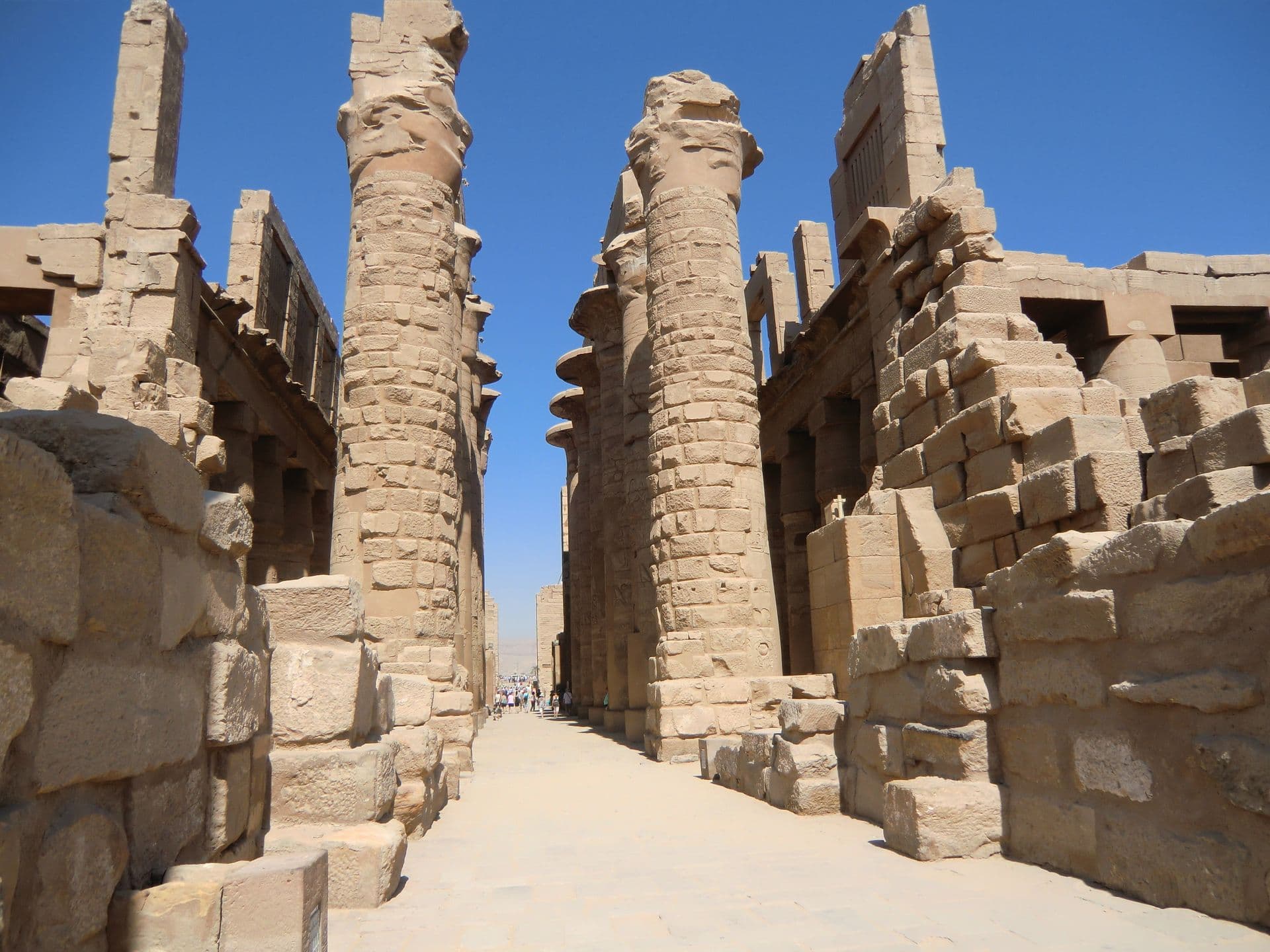
Luxor, often called the world’s greatest open-air museum, is a city where the past feels astonishingly alive. Located on the east bank of the Nile, about 670 kilometers south of Cairo, Luxor stands on the site of ancient Thebes, the capital of Egypt during the New Kingdom (1550–1070 BC). What makes Luxor unique is that history here isn’t locked away in dusty books or behind glass — it surrounds you at every step, in colossal temples, colorful tombs, and even in the traditions of the people who call Luxor home today.
To visit Luxor is to stand face-to-face with the greatest pharaohs of Egypt, to walk the same paths they did, and to experience the legacy they left for eternity.
A City with Ancient Roots
The city of Luxor grew on the foundations of Thebes, a place the ancient Egyptians called Waset. This city rose to prominence during the Middle and New Kingdoms, when pharaohs such as Hatshepsut, Tutankhamun, Seti I, and Ramses II ruled a vast empire stretching from Nubia to the Near East.
Luxor was not just a political capital — it was also a spiritual one. The temples of Karnak and Luxor were the beating heart of Egyptian religion, dedicated to the Theban triad of gods: Amun, Mut, and Khonsu. Every year, the grand Opet Festival was celebrated here, with processions, rituals, and ceremonies that reaffirmed the divine power of the pharaoh.
Today, Luxor’s temples and tombs remain among the most impressive achievements of human civilization, drawing travelers, scholars, and dreamers from across the globe.
The East Bank – City of the Living
The east bank of Luxor, where the modern city stands, was the “city of the living” in pharaonic times. It is home to two of Egypt’s most magnificent temples:
- Karnak Temple Complex – The largest religious complex ever built by man, Karnak was expanded over 2,000 years by successive pharaohs. Walking through the Great Hypostyle Hall, with its 134 massive columns, feels like entering a stone forest designed for the gods themselves. Sacred lakes, obelisks, and towering statues testify to the power and devotion of ancient Thebes.
- Luxor Temple – Located in the heart of the city, Luxor Temple was dedicated to the rejuvenation of kingship. At night, illuminated by golden lights, it becomes one of the most magical places in Egypt. The Avenue of Sphinxes, recently restored, once linked Luxor Temple with Karnak, stretching for nearly 3 kilometers.
The east bank also hosts vibrant markets, traditional cafés, and the Luxor Museum, which houses remarkable artifacts, including mummies of pharaohs and masterpieces of ancient sculpture.
The West Bank – City of the Dead
Across the Nile lies the West Bank, ancient Thebes’ sacred necropolis. Known as the “city of the dead,” it was here that the pharaohs of the New Kingdom built their tombs, seeking eternal life among the gods.
- Valley of the Kings – This valley contains over 60 royal tombs carved deep into the mountains. The most famous is the tomb of Tutankhamun, discovered in 1922 by Howard Carter, filled with treasures that stunned the world. Inside these tombs, vivid wall paintings depict the pharaoh’s journey to the afterlife, remarkably well-preserved after thousands of years.
- Valley of the Queens – Resting place of royal women, including the breathtaking tomb of Nefertari, known as the “Sistine Chapel of Ancient Egypt” for its brilliant colors and artistry.
- Temple of Hatshepsut at Deir el-Bahari – A masterpiece of ancient architecture, this terraced temple blends seamlessly into the cliffs, reflecting the ambition and vision of Egypt’s only female pharaoh.
- Colossi of Memnon – Two colossal statues of Amenhotep III that once guarded his mortuary temple. Standing at sunrise, they seem to watch over the Theban plain, silent witnesses to history.
The West Bank also includes the Ramesseum, Medinet Habu (the mortuary temple of Ramses III), and tombs of nobles that reveal intimate details of daily life in ancient Egypt.
People and Culture of Luxor
Luxor is not only about monuments. Its people embody Egypt’s legendary hospitality. Life here flows with the Nile: farmers tending their fields, fishermen casting their nets, and children playing along the riverbanks. Visitors often notice how proud Luxor’s residents are of their heritage — many families have lived for generations in villages close to the tombs and temples, with traditions and stories passed down like treasures.
Luxor also has a thriving artistic culture. Local artisans specialize in alabaster carving, creating beautiful vases, statues, and ornaments using techniques similar to those of their ancestors. Markets on both banks of the Nile sell handmade jewelry, spices, and colorful textiles, giving visitors a chance to take home a piece of Egypt’s craft heritage.
Food and Flavors
The flavors of Luxor are simple yet unforgettable, often linked to the river and the fertile farmlands surrounding it. Staples include:
- Molokhia – a green soup served with rice or bread.
- Stuffed vegetables (Mahshi) – zucchini, peppers, or vine leaves filled with rice and herbs.
- Feteer Meshaltet – a flaky layered pastry, often served sweet with honey or savory with cheese.
- Fresh fish from the Nile.
Dinner on a Nile felucca (traditional sailing boat) or in a riverside restaurant at sunset is one of the most memorable experiences a traveler can have in Luxor.
Experiencing Luxor Today
Luxor offers more than sightseeing. Adventurers can enjoy a hot air balloon ride at dawn over the West Bank, watching the sun rise over the temples and the Nile in one of the most breathtaking experiences on earth. Camel rides, horseback excursions, and Nile cruises also allow visitors to see the landscape from unique perspectives.
For those interested in culture, local performances of Nubian music and traditional dances bring Egyptian heritage to life. The city also hosts international conferences and festivals, celebrating both ancient and modern Egypt.
Luxor by Night
When the day cools, Luxor transforms. The temples glow under dramatic lighting, the Nile reflects the moonlight, and the city’s corniche becomes a lively promenade. Cafés serve strong Egyptian coffee and sweet tea, while souks bustle with life late into the evening. This night-time magic makes Luxor a destination where the journey never truly ends when the sun sets.
Gateway to More Wonders
For many travelers, Luxor is the highlight of Egypt. Yet it is also the perfect starting point for further adventures: sailing upriver to Aswan, exploring the desert temples of Dendera and Abydos, or taking a cruise that follows the path of the pharaohs along the Nile.
Final Thought
Luxor is not just a city — it is a bridge between worlds. Here, the achievements of ancient Egypt rise majestically from the sands, yet life continues to thrive around them. It is a place where history is not frozen in time but woven into daily life.
For travelers seeking culture, adventure, spirituality, or family exploration, Luxor offers it all. Standing in Luxor, you don’t just learn about history — you feel it, you live it, and you carry it with you forever.
Highlights of Luxor
- Karnak Temple ComplexThe largest religious complex ever built, expanded over 2,000 years. The Great Hypostyle Hall's 134 massive columns form a stone forest for the gods.
- Valley of the KingsRoyal burial ground with 60+ tombs including Tutankhamun's, adorned with vivid hieroglyphs preserved for millennia.
- Luxor TempleIn the heart of the city, dedicated to the rejuvenation of kingship. At night, illuminated by golden lights, it becomes magical.
- Temple of HatshepsutThe mortuary temple of Egypt's only female pharaoh, carved dramatically into limestone cliffs at Deir el-Bahari.
- Valley of the QueensResting place of royal women, including Nefertari's tomb — the 'Sistine Chapel of Ancient Egypt'.
- Hot Air Balloon over the NileWatch sunrise over the temples and west bank — one of the most breathtaking experiences on earth.
Tours in Luxor
Prices shown for Low Season
- 11 Days Luxury Private Egypt Tour – Cairo, Abu Simbel, Nile Cruise & LuxorLuxury · Nile Cruise11 Days / 10 Nights$3,520
- (13 Days) Luxury Private Egypt Tour ItineraryLuxury · Nile Cruise13 Days / 12 Nights$4,160
- Pharaohs in Private: The Shorter Nile JourneyPrivate · Nile Cruise10 Days / 9 Nights$3,120
- Pharaohs in Private: Nile & AlexandriaPrivate · Nile Cruise11 Days / 10 Nights$3,440
- Treasures of Egypt: 6-Day Private Tour & Nile CruisePrivate · Nile Cruise6 Days / 5 Nights$1,880
- Full day tour to Dendera & Abydos Day TourDay Tour1 Day / 0 Nights$152
- Private Luxor East & West Bank Full-Day TourDay Tour1 Day / 0 Nights$152
- Private Luxor West Bank Cultural & Archaeological TourDay Tour1 Day / 0 Nights$152
- 8-Day Complete Excursion ProgramGroup · Nile Cruise8 Days / 7 NightsMax 15 travelers$1,352
- Spiritual TOur EgyptCultural · Nile Cruise15 Days / 14 NightsMax 6 travelers$6,720
- Treasures of Egypt: Cairo, Alexandria, Nile & Red SeaLuxury · Nile Cruise12 Days / 11 NightsMax 12 travelers$2,792
- Egypt Eternal Elegance: Cairo, Abu Simbel, Luxor & The Red SeaLuxury11 Days / 10 NightsMax 10 travelers$3,400